
Vacuum Rotary Unions for Robotic Applications
Robotic systems that rely on vacuum tooling need a way to maintain airflow while allowing parts of the equipment to rotate. A vacuum rotary union provides a continuous vacuum path between stationary and rotating components, allowing the tooling to move freely without twisting or restricting vacuum hoses.
How the Rotary Union Works
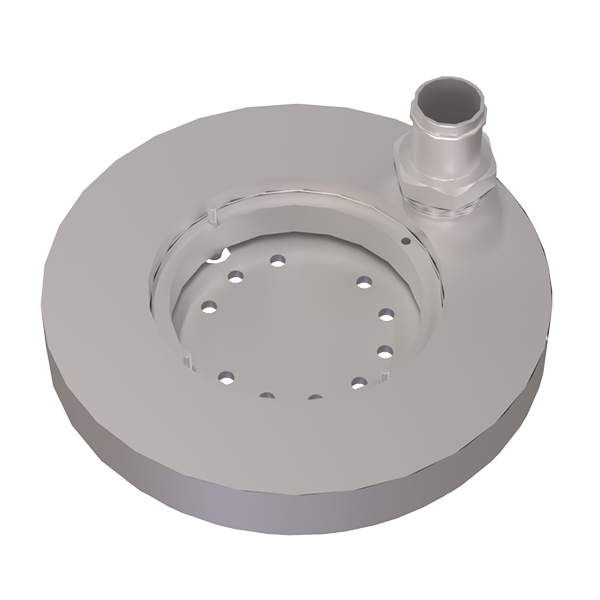
The rotary union consists of a stationary upper section and a rotating lower section. The stationary side connects to the vacuum pump, while the rotating side connects to the robotic tooling. When the two sections are joined, an internal passage allows air to move continuously through the union during rotation. Dynamic seals between the stationary and rotating components help reduce vacuum leakage while still allowing the lower section to rotate. Ports, fittings, mounting features, and other components can be designed around the layout of the equipment.
Solving a Hose Management Problem
Connecting a vacuum hose directly to rotating tooling can cause the hose to twist, bend, or interfere with the robot’s movement. Over time, this can also place additional wear on the hose and its connections. By routing vacuum through the rotary union, the stationary hose can remain in place while the tooling rotates independently. This creates a cleaner connection and gives the robotic system greater freedom of movement.
Built Around the Application
Vacuum rotary unions can be customized based on available space, port sizes, mounting requirements, vacuum level, airflow, rotational speed, and duty cycle. This makes them well suited for robotic picking, material handling, packaging, loading and unloading, and other automated applications where vacuum and rotation need to work together.